DOG HEALTH · VETERINARY RESEARCH
The "Routine" Dental Cleaning That Puts Your Dog Under Anesthesia
Fasting, an IV line and a breathing tube, just to clean his teeth. Over 100,000 dog parents now take the tartar off at home, while their dog is wide awake.

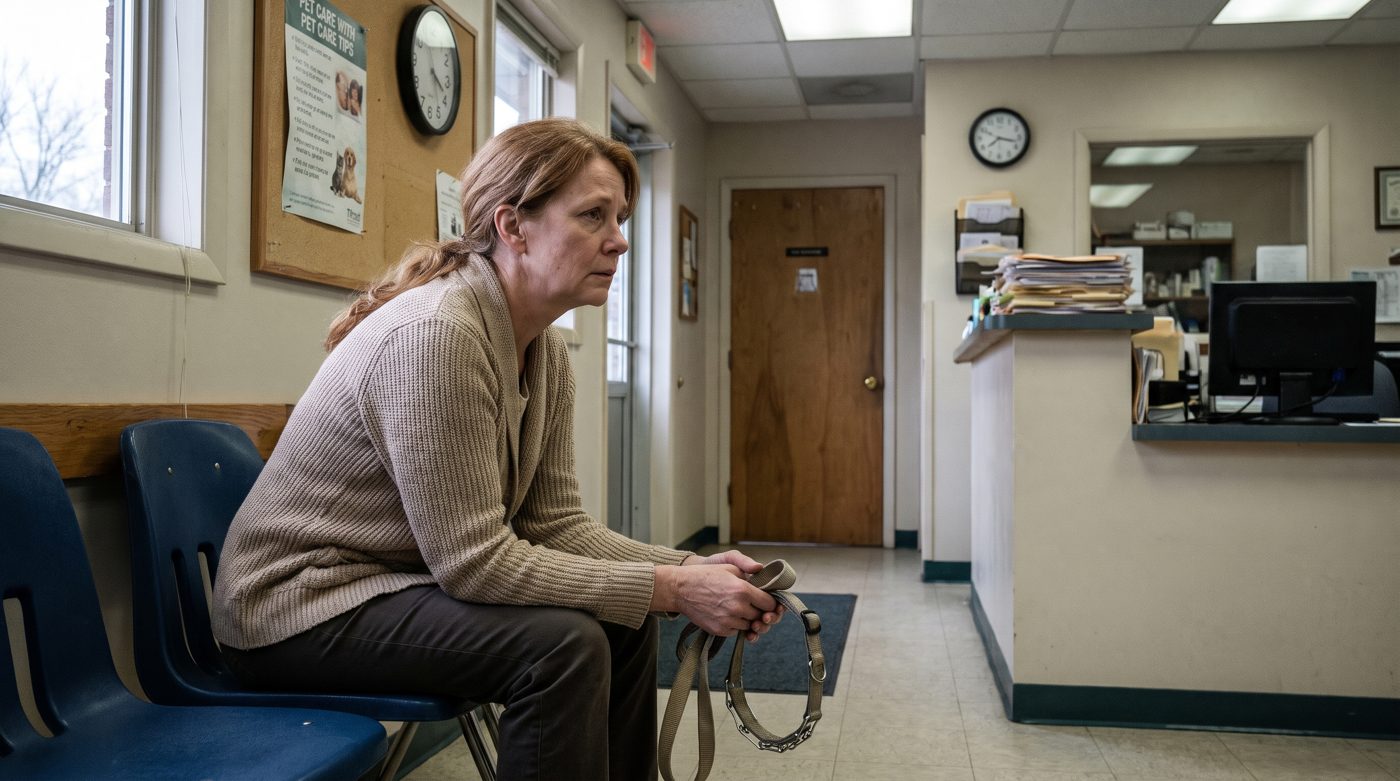
"It's just a routine cleaning, he'll be home by dinner." You took his food bowl away the night before, handed over the leash at the front desk, and spent the day staring at your phone, waiting for the call that says he's awake.
Then, a year later, sometimes less, the tartar was back on the same teeth, along the same gumline, with a new estimate attached.
You bought the chews, the additives and the powders, you paid for the cleaning, sometimes more than once, and the tartar came back every single time, because almost nobody tells dog parents what tartar really is.
The Problem Nobody Calls by Its Name
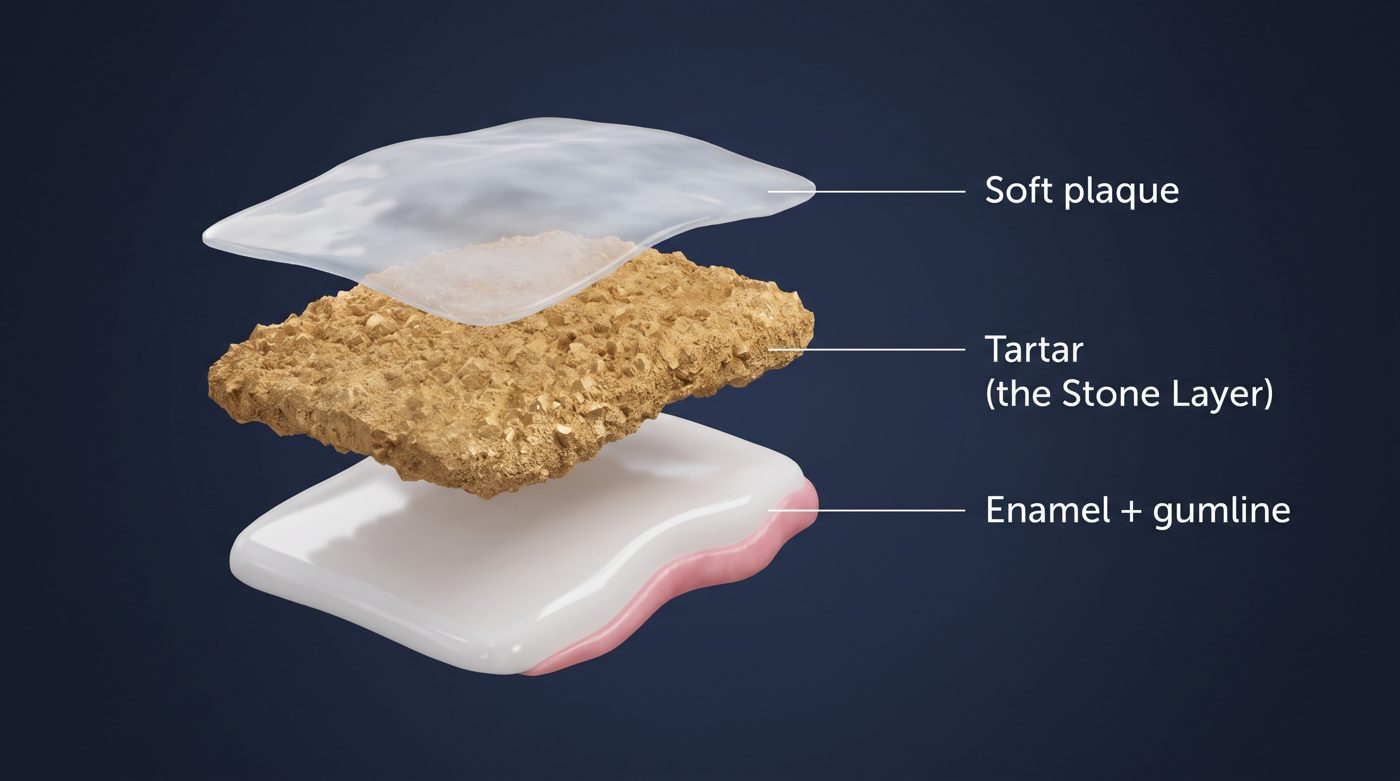
Tartar isn't dirt a better chew should wipe off. It's plaque that has turned into mineral, a hard Stone Layer bonded to the tooth right where it meets the gum, and nothing a dog chews or drinks can break it.
EVIDENCE · 01
98% of dogs developed early periodontitis within 30 weeks once their tooth brushing was stopped.
Researchers followed 52 Miniature Schnauzers, and periodontal disease is the most common clinical condition in adult dogs, with most showing some evidence of it by age three.
Marshall et al., BMC Veterinary Research, 2014; AAHA / American Veterinary Dental College
The problem is close to universal, so the real question is what it takes to deal with it, and that's where the word "routine" falls apart.
EVIDENCE · 02
Every professional dental cleaning in dogs calls for general anesthesia with endotracheal intubation.
That means a tube placed in the windpipe, the same depth of anesthesia used for surgery.
AAHA Dental Care Guidelines for Dogs and Cats, 2019
What "Routine" Actually Involves
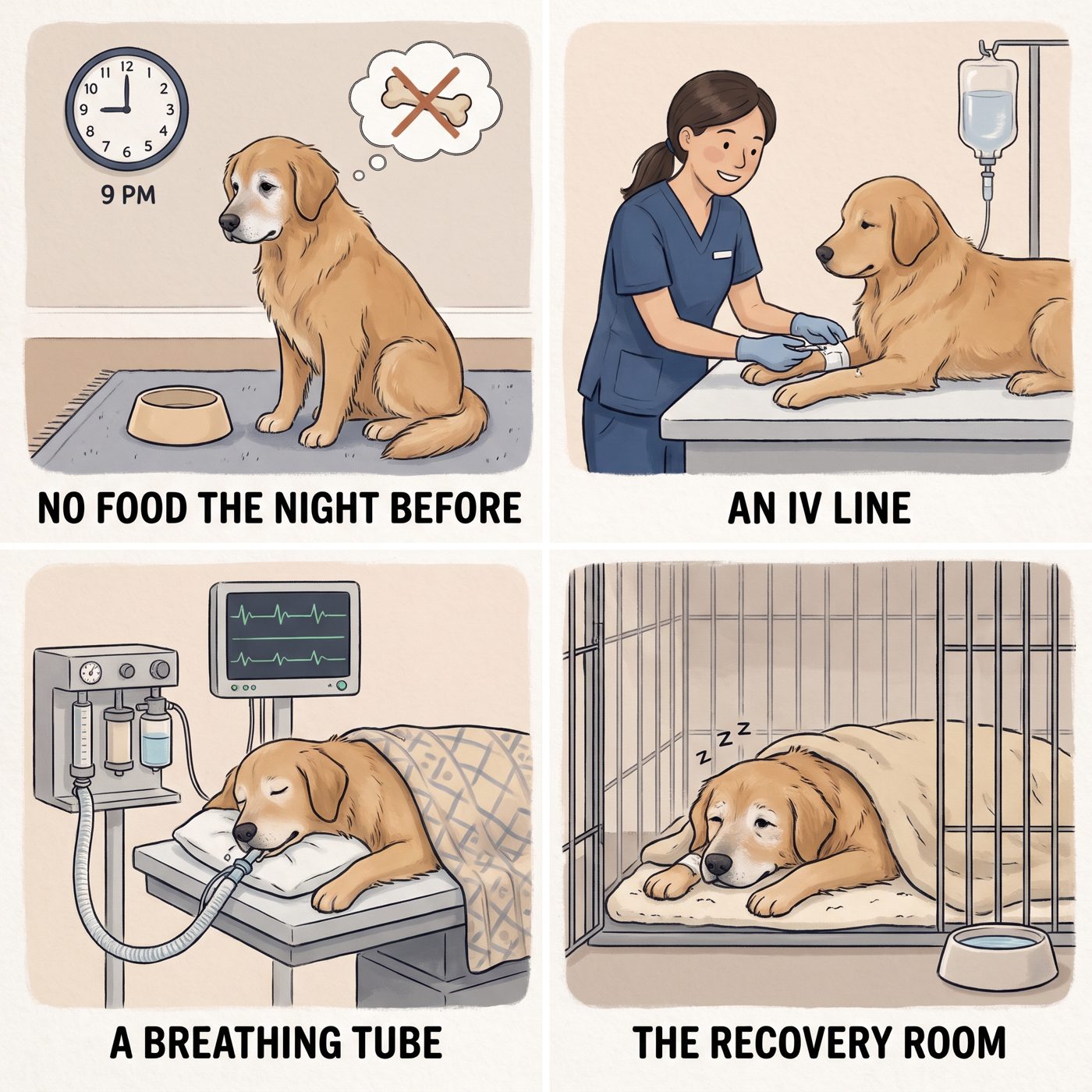
01 · The breathing tube
- No food the night before
- Sedation, then an IV line in the leg
- A tube down the throat, and an hour or more fully unconscious
A dog can't hold his mouth open and stay still for a scaling, so the clinic takes away his ability to move, swallow and breathe on his own.
02 · The risk, and who carries more of it
- The consent form, the question about his age, the extra bloodwork "because he's a senior now"
EVIDENCE · 03
About 1 in 600 dogs (0.17%) died from anesthesia-related causes within 48 hours, rising to 1.33% (about 1 in 75) in sick or higher-risk dogs.
The CEPSAF study followed more than 98,000 dogs anesthetized in UK practices, and increasing age and very small body size were both linked to higher risk.
Brodbelt et al., Veterinary Anaesthesia and Analgesia, 2008; Brodbelt et al., JAVMA, 2008
The dogs who need cleanings most often, the seniors and the small breeds, are exactly the ones anesthesia is hardest on.
03 · The recovery room
- A dog who is wobbly, cold and confused when you pick him up, and a night on the floor next to his bed
EVIDENCE · 04
Nearly half of anesthesia-related deaths in dogs (47%) happened after the procedure, during recovery.
The danger doesn't end when the cleaning does.
Brodbelt et al., Veterinary Anaesthesia and Analgesia, 2008
EVIDENCE · 05
83.6% of dogs were hypothermic by the end of anesthesia.
In 1,525 dogs, smaller dogs and longer procedures were among the factors linked to a bigger drop in temperature.
Redondo et al., Veterinary Record, 2012
04 · The bill, and the next one
- $500 to $1,500 once X-rays and extractions are added, plus pre-anesthetic bloodwork, and a reminder card for next year
The bill would be easier to accept if it happened once, and it never does.
Why It Always Comes Back
Tartar comes back because of how fast it forms, not because of anything you failed to do at home.
EVIDENCE · 06
Plaque left on the tooth starts hardening into tartar within about three days.
Once it is mineralized, brushing and chewing no longer remove it.
Merck Veterinary Manual
EVIDENCE · 07
Periodontal disease becomes more common with age and more common as body weight goes down.
That means small breeds and seniors carry the most tartar.
Harvey, Shofer & Laster, Journal of Veterinary Dentistry, 1994
That's the loop: tartar forms in days, only force removes it, and the only force on offer is anesthesia, so the dogs who need it most go under again and again, a little older and more fragile each time.
The Cleaning Did Exactly What It Was Designed to Do
None of this is against your vet, because a professional cleaning removes the tartar that's there, and it does it well. A cleaning resets the clock, it doesn't stop it, and new plaque starts building the same day, hardening again within about three days.
Why Nothing on the Pet Store Shelf Has Ever Worked
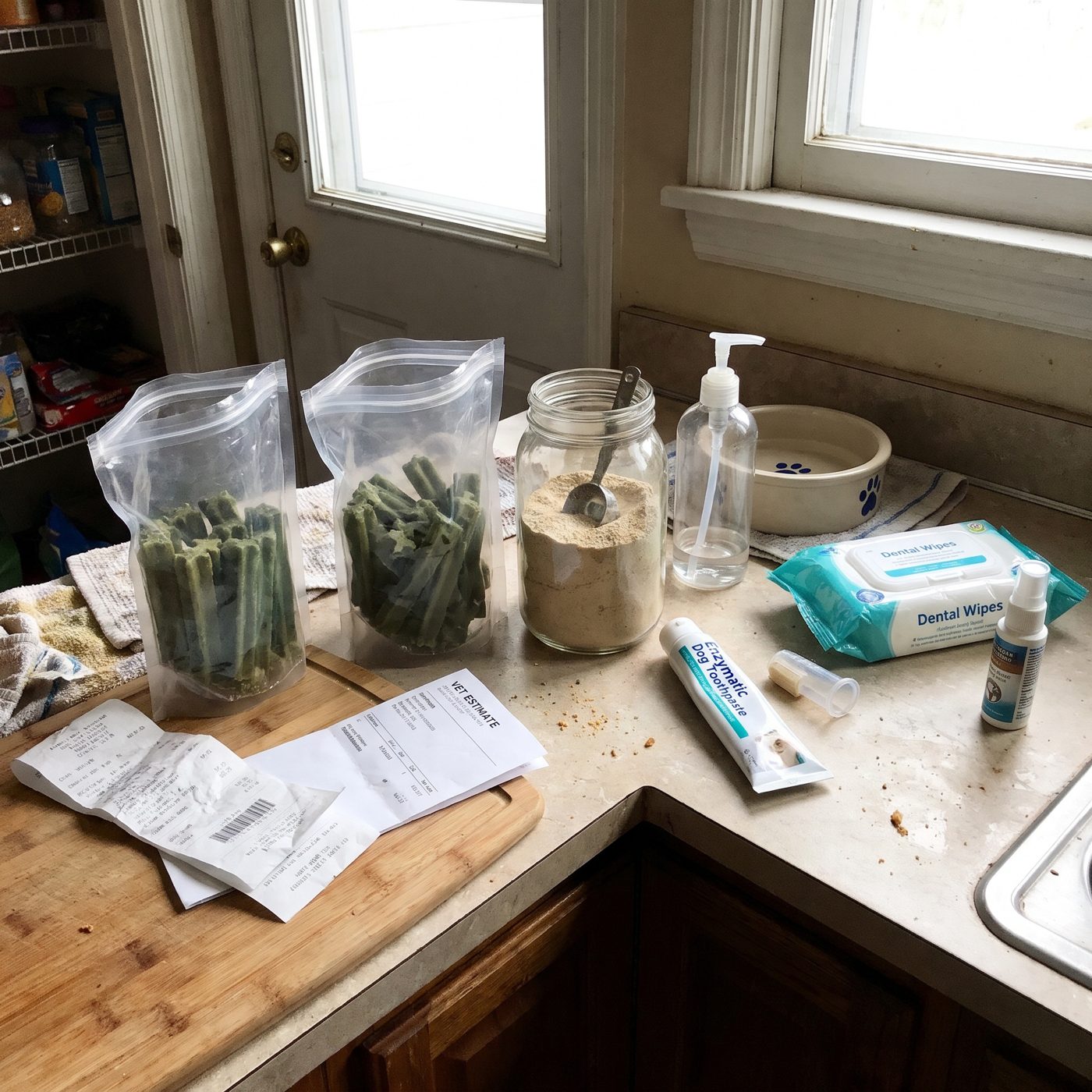
You've probably worked through the whole shelf:
- Dental chews, water additives and seaweed powder
- Enzyme toothpaste, sprays and gels
- Rope toys, antlers, "dental" bones and finger brushes
- An "anesthesia-free cleaning" with a hand scraper at the groomer
Maybe a small difference at first, then nothing, while the brown line on the back teeth stayed exactly where it was.
EVIDENCE · 08
The VOHC seal goes to products that help control plaque and tartar, and tartar that has already hardened can only be removed mechanically.
Even the approved products only slow down new buildup.
Veterinary Oral Health Council, accepted products protocol
Every chew, additive, powder and brush was built for soft plaque, and none of them was ever built to break a mineral off a tooth.
The Consensus Has Shifted, and Dog Parents Were Right
Dog parents have said it for years: there has to be something between "do nothing" and "put him under." Veterinary dental guidelines, including AAHA's, now put home care at the center, because what happens at home every day decides how quickly the tartar comes back.
The gap was always the tool, because home care meant soft-plaque products, and nothing could remove hardened tartar at home.
What Hardened Tartar Actually Needs
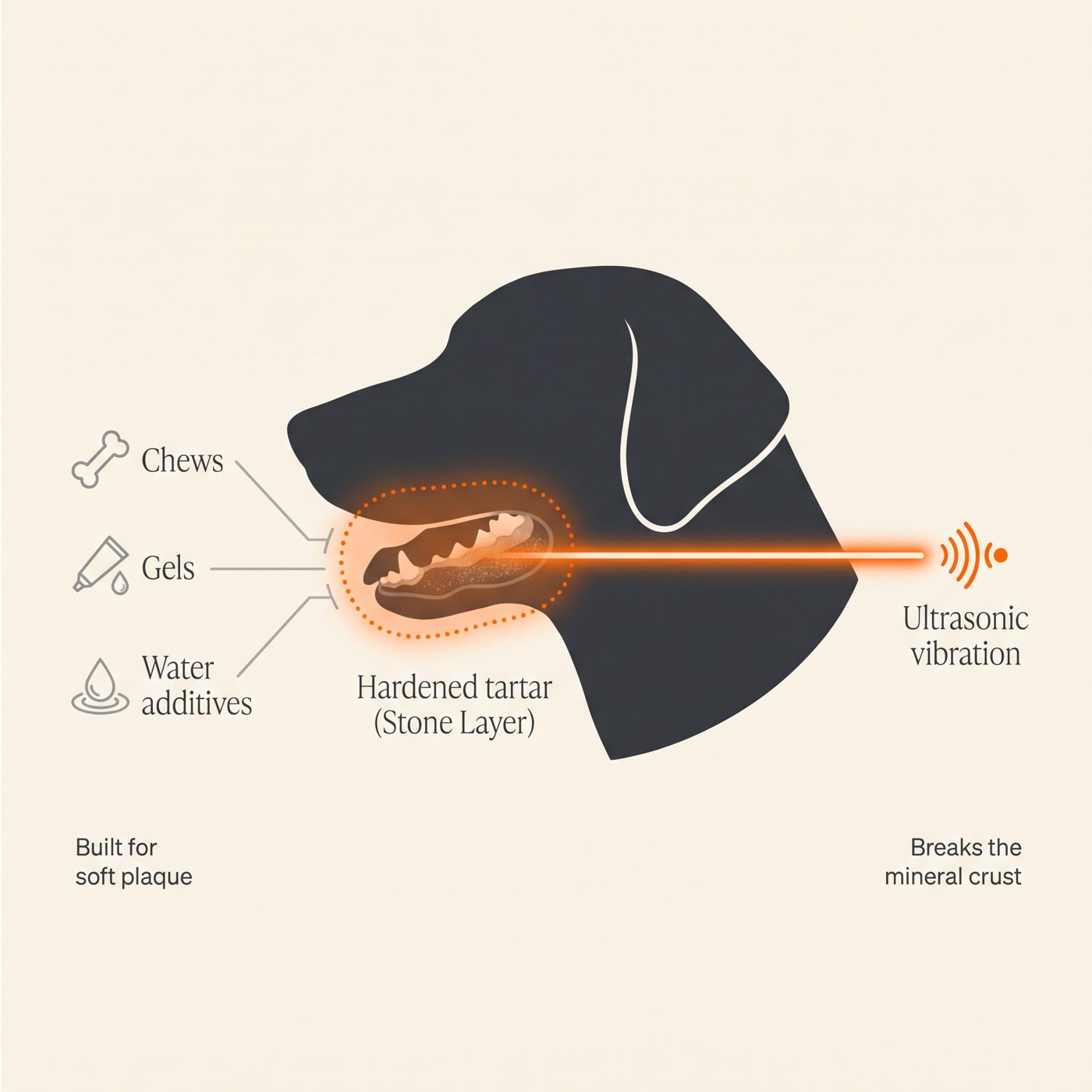
A Stone Layer needs mechanical action, and the vet already uses it: ultrasonic vibration, a fine tip vibrating thousands of times per second that cracks hardened tartar and flakes it off the tooth. Clinic equipment is loud and big, and it was never built for a dog who's awake.
That's the question behind Canivet, an ultrasonic tartar remover built for dogs at home, quiet enough not to scare him, small enough for any mouth, and with a sensor that protects the gums so it can be used on a dog who's wide awake.
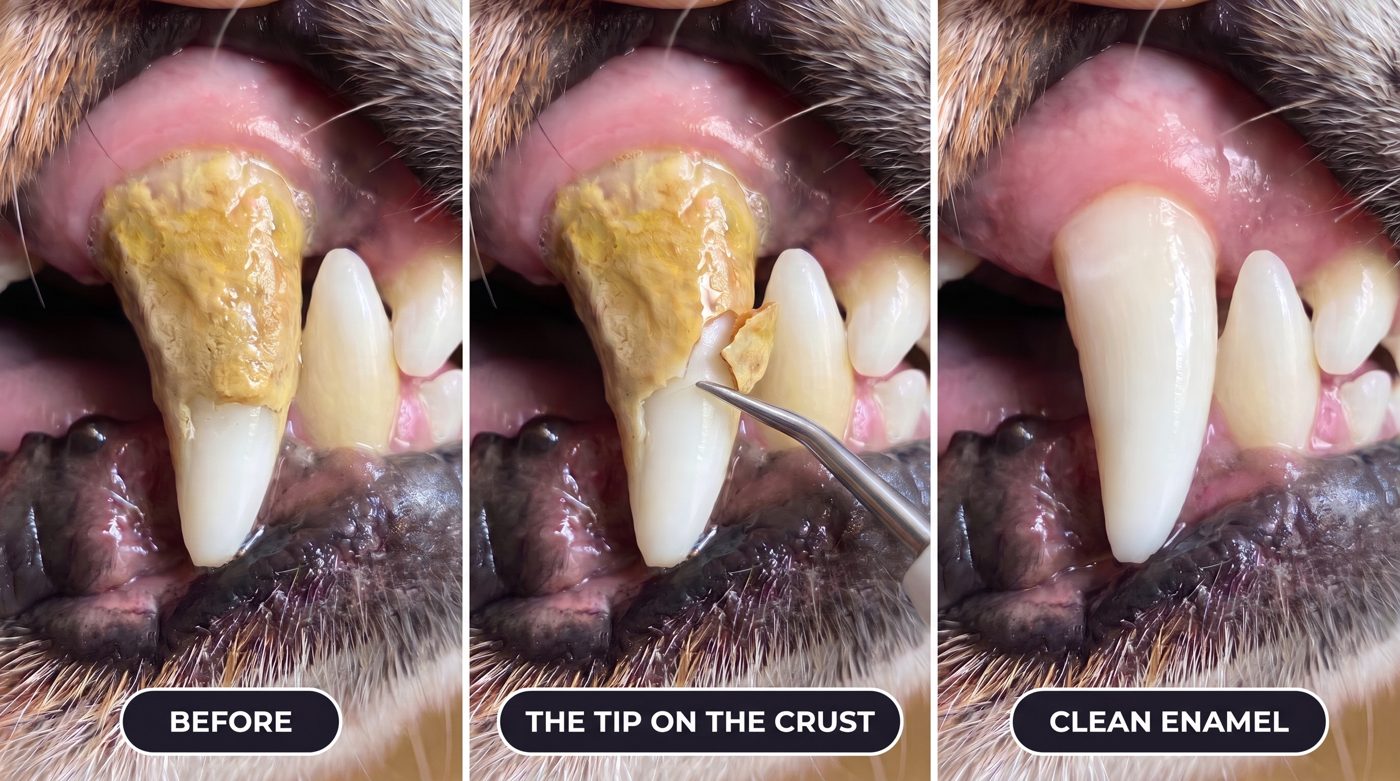
You lift the lip, rest the tip on the crust, and watch it crack and come off the tooth in your hand, while he's lying next to you, awake, tail still going.
Watch It Come Off
Same tooth, same dog, one session: the crust, the tip resting on it, and the clean enamel underneath.
One Thing Should Be Said Plainly
Canivet does not replace your vet. Keep the checkups and follow their advice, and let Canivet take the hardened tartar off at home, while he's wide awake, instead of waiting a year for it to thicken under the next estimate.
The Results
Owners see the first crust come off in session one. Here's what 112 Canivet customers reported after a full month:
- 88% saw a visible improvement in their dog's dental hygiene
- 83% saw less tartar on their dog's teeth
- 85% said their dog adapted to it easily
- 91% would recommend Canivet to another dog parent
100,000+ dog parents
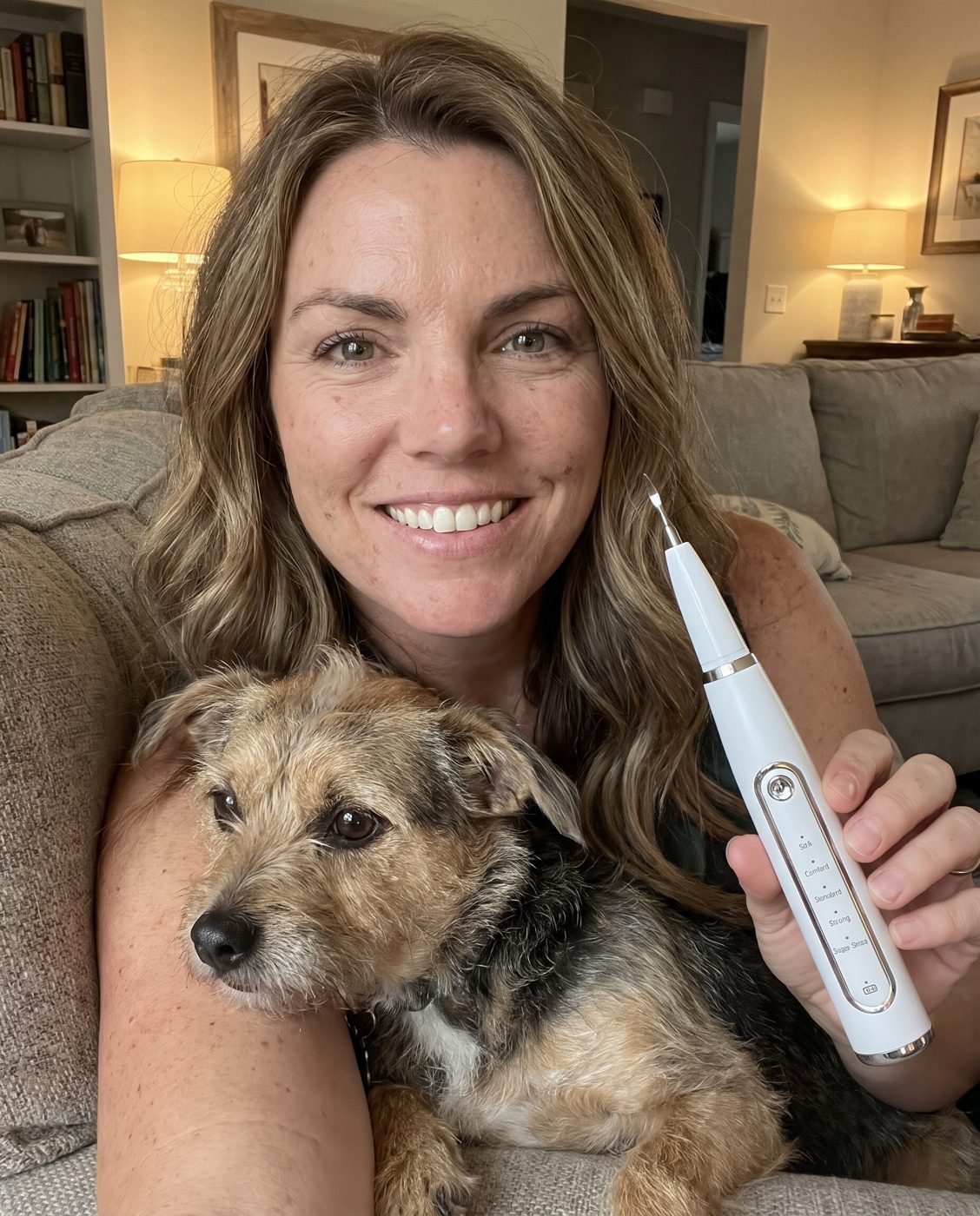
now trust Canivet, with an average rating of 4.8 stars.
No fasting night, no consent form and no afternoon waiting for the phone to ring, just a few minutes on the couch while the crust comes off his teeth.
Inside Canivet
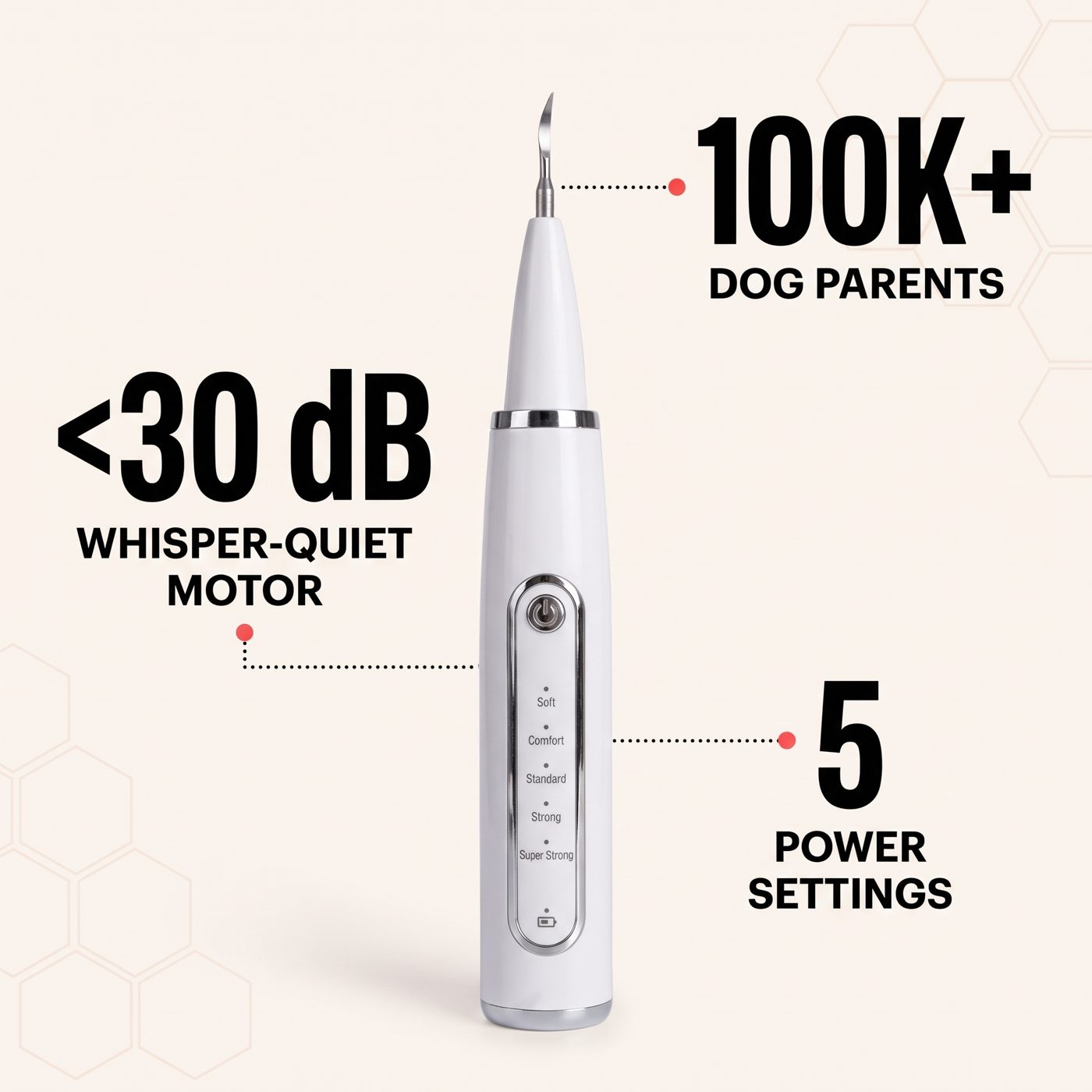
- Ultrasonic vibration: the same type of technology the vet uses, breaking hardened tartar apart so you see the result immediately.
- Gum sensor: the tip stops the moment it touches soft tissue, which is what makes it safe to use on an awake dog.
- Under 30 dB: about as quiet as a whisper, so most dogs barely react.
- 5 settings (Soft, Comfort, Standard, Strong, Super Strong): start soft, then go up for thick, older tartar on the back teeth.
- LED light: it lights up the back of the mouth, where tartar builds most and is hardest to see.
- Small tip: it fits a Chihuahua's mouth as easily as a Labrador's.
- About 30 days of battery: charge it, put it in a drawer, and it's ready whenever you are.
Every part was designed around one problem: removing tartar mechanically, on a dog who is awake.
The Protocol
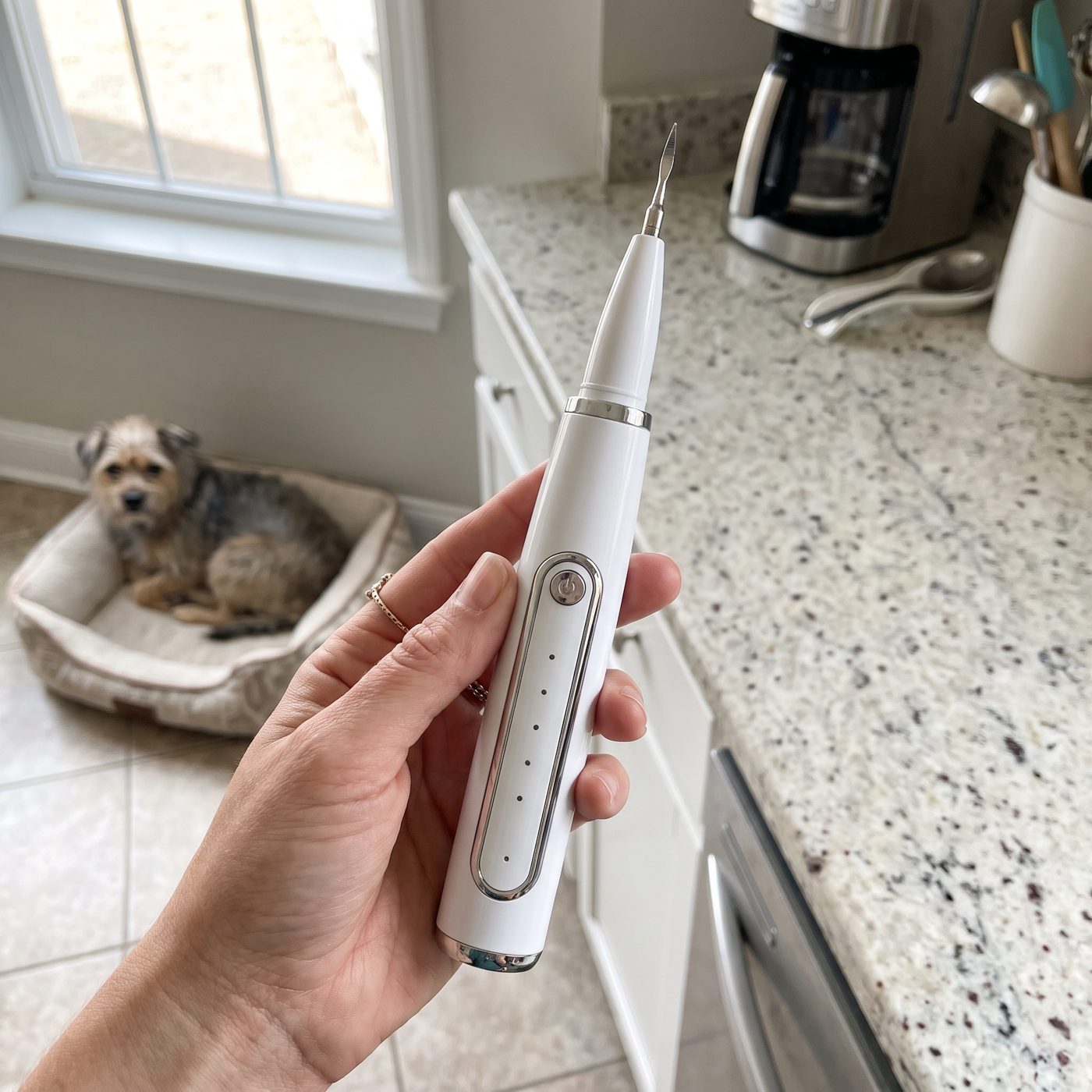
Pick a calm moment, start on Soft, lift the lip and place the tip on the tartar, a few teeth per session. When the tartar starts building again, you take it off yourself in a few minutes on the couch, as often as he needs it.
- No anesthesia, no fasting, no appointment
- No pet store chew that only "helps control"
Keep the brushing, the chews and the checkups, because Canivet takes care of the part none of them could reach.
The 60-Day Results Guarantee
Use Canivet for 60 days, and if you don't see results, we'll refund you. A cleaning under anesthesia often runs $500 to $1,500 once X-rays and extractions are added, and it doesn't come with a refund when the tartar comes back.
Why Waiting Makes It Harder
Plaque hardens in days and every month adds a new layer, which brings another estimate, another fasting night and another round of anesthesia for a dog who is a year older. The tartar on your dog's teeth today is the thinnest it will ever be.
From Dog Parents Who Were Tired of Putting Their Dog Under
★★★★★ 4.8 / 5 · Trusted by 100K+ dog parents
“My dog was due to his annual teeth cleaning, but I was hesitant because of the sedation vets give him and the cost of this dental service… My dog did not mind it at all after he realized that it does not hurt. I really like that it activates only on hard surface and does not injure the gums. It really does work!”
Holly Britt · Canivet customer“…He has a heart murmur so I didn't want to have him put under an aesthetic at the vets. I've been cleaning his teeth with a baby toothbrush but it didn't take off the built up plaque… This device took all of the plaque off quickly, plus he didn't mind me doing it! Now his teeth are white…”
Deanne · Canivet customer“My dog is usually super nervous, especially when it comes to anything near his mouth… It's super quiet, which helped keep him calm the whole time. I was expecting a fight, but he actually let me clean his teeth without any stress.”
Ava J. · Canivet customerImportant: Canivet Is Only Sold at TryCanivet.com
Canivet is made in small batches and sold only through its official store, so if you see it in a pet store or anywhere else, it isn't the real thing. Each batch sells out faster than it's restocked.
While this batch lasts, Canivet is $60 off, and every order ships free with a free gift included, one tool with no anesthesia, no fasting night and nothing to reorder, backed by our 60-day results guarantee.